The Story of Kool-Aid: From a Budget-Friendly Family Drink to a Modern Health Debate
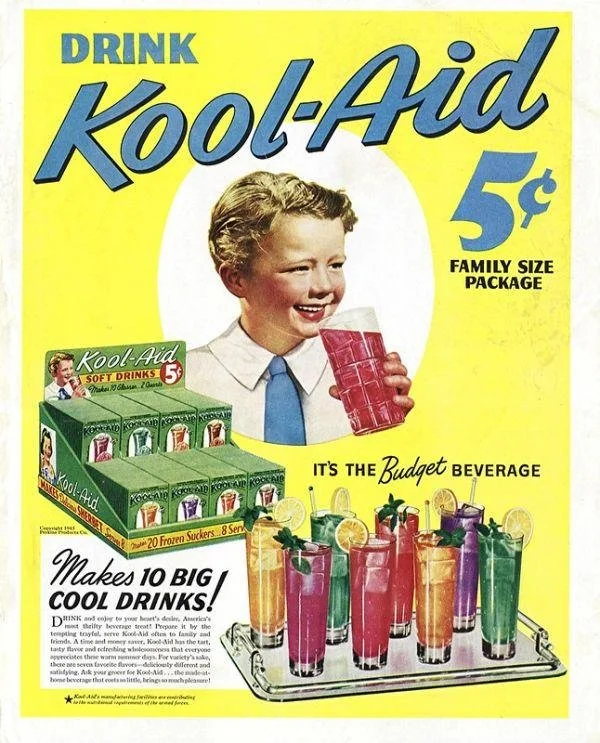
Few American drinks are as recognizable as Kool-Aid. For generations, it has been a symbol of childhood, summer afternoons, and affordable family refreshments. Yet the drink's history is also a story of innovation, economic hardship, and changing attitudes about nutrition.
The Inventor: Edwin Perkins
The creator of Kool-Aid was Edwin Perkins, an entrepreneur from Hastings, Nebraska.
Perkins began selling household products by mail before experimenting with flavored beverages. One of his earliest products was called Fruit Smack, a liquid fruit concentrate sold in glass bottles. While popular, the bottles were expensive to manufacture and often broke during shipping.
Determined to find a better solution, Perkins removed the water from the concentrate, leaving behind a powdered flavoring that customers could mix with water at home.
In 1927, Kool-Aid was born.
Why Kool-Aid Was Created
Kool-Aid wasn't invented as a luxury drink—it was designed to solve practical problems.
Its advantages included:
Lower shipping costs
Longer shelf life
Easier storage
Lower retail price
Families only needed to add sugar and water
During the late 1920s and especially throughout the Great Depression, many families couldn't afford expensive bottled soft drinks. Kool-Aid offered a sweet beverage for just a few cents, making it especially attractive to working-class households.
The original flavors included:
Cherry
Lemon-Lime
Grape
Orange
Raspberry
Strawberry
Becoming an American Icon
Following World War II, Kool-Aid became one of America's most successful food brands.
Marketing focused on:
Family fun
Summer refreshment
Birthday parties
Neighborhood lemonade stands
Affordable treats
One of the biggest marketing successes came in the 1950s with the introduction of the Kool-Aid Man, whose enthusiastic "Oh Yeah!" became a pop culture catchphrase and helped make the brand instantly recognizable.
Nutritional Changes Over Time
Originally, Kool-Aid contained flavored powder that consumers mixed with a substantial amount of table sugar. Later, ready-to-drink versions and different product lines were introduced, some containing added sugars while others were sugar-free and use non-sugar sweeteners.
Today's products vary widely, so the nutritional content depends on which version is consumed.
Why Drinking Too Much Kool-Aid Can Be a Health Concern
Kool-Aid itself is not inherently dangerous when consumed occasionally as part of a balanced diet. However, frequent consumption of sugar-sweetened versions can contribute to health problems.
Potential concerns include:
Excess Sugar
Traditional prepared Kool-Aid can contain significant amounts of added sugar.
High intake of added sugars is associated with:
Weight gain
Increased risk of type 2 diabetes
Higher risk of heart disease
Elevated triglycerides
Fatty liver disease
Tooth Decay
Sugar feeds bacteria in the mouth, while the drink's acidity can contribute to enamel erosion, increasing the risk of cavities.
Blood Sugar Spikes
Large amounts of sugary beverages can cause rapid increases in blood glucose, followed by energy crashes, particularly in people with diabetes or insulin resistance.
Empty Calories
Sugary drinks provide calories but relatively little protein, fiber, vitamins, or minerals compared with whole foods, making it easier to consume excess calories without feeling full.
Is Sugar-Free Kool-Aid Better?
Sugar-free versions reduce or eliminate added sugar and therefore avoid many of the risks associated with high sugar intake. However, they are still best viewed as flavored beverages rather than nutritional drinks. Water remains the healthiest everyday choice, with milk and unsweetened tea also being good options depending on individual dietary needs.
Kool-Aid's Lasting Legacy
Nearly a century after its invention, Kool-Aid remains part of American culture. What began as an innovative way to help families enjoy an inexpensive fruit-flavored drink became one of the country's most recognizable grocery products.
Its history reflects changing priorities over time:
1920s: A practical, affordable innovation.
1930s: A budget-friendly staple during the Great Depression.
1950s–1980s: A symbol of childhood and family fun through memorable advertising.
Today: A nostalgic brand whose sugar-sweetened versions are best enjoyed in moderation, in line with modern nutrition guidance.
Kool-Aid's story is ultimately one of American ingenuity—creating a product that met the needs of working families—and of how evolving nutritional science has reshaped our understanding of sugary beverages and their role in a healthy diet.